Explore Our Housing Programs
Learn more about Conway Housing Authority’s housing assistance, resident services, employment resources, and supportive programs.
Public Housing
The Conway Housing Authority currently has two public housing options, the Family Site and Oakwood Place.
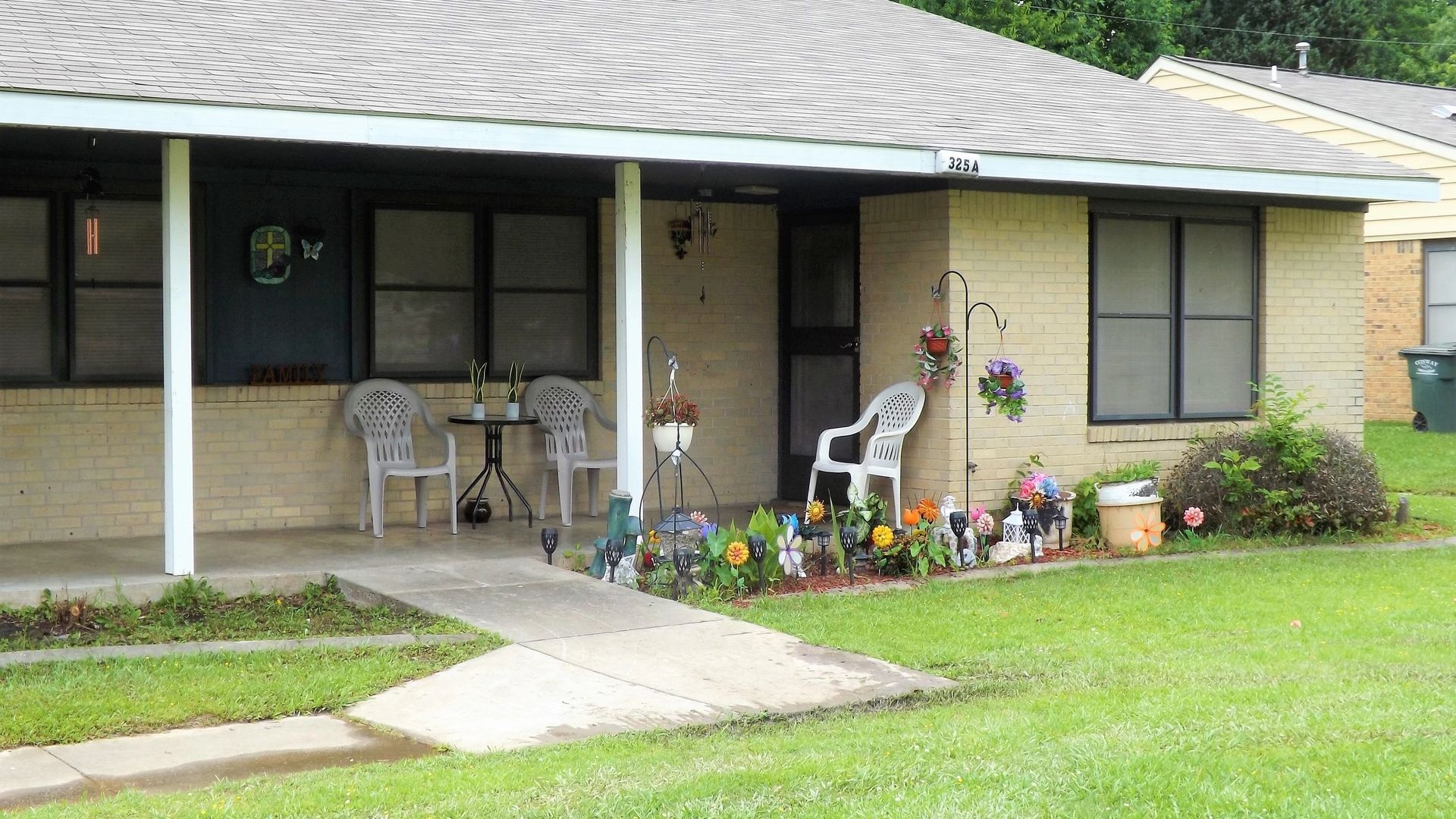
The Family Site
The Public Housing Family Site is located between Baridon and Davis Streets, as well as apartments on South Erbach.
The family site complex has 91 units ranging from one to four bedrooms each in a duplex-style dwelling.
On the property is an Early Head Start program administered by the Community Action Program for Central Arkansas (CAPCA), where priority enrollment is given to the children who live on the family site.
Please contact us for more information:
Office: (501) 327-0156, ext. 107
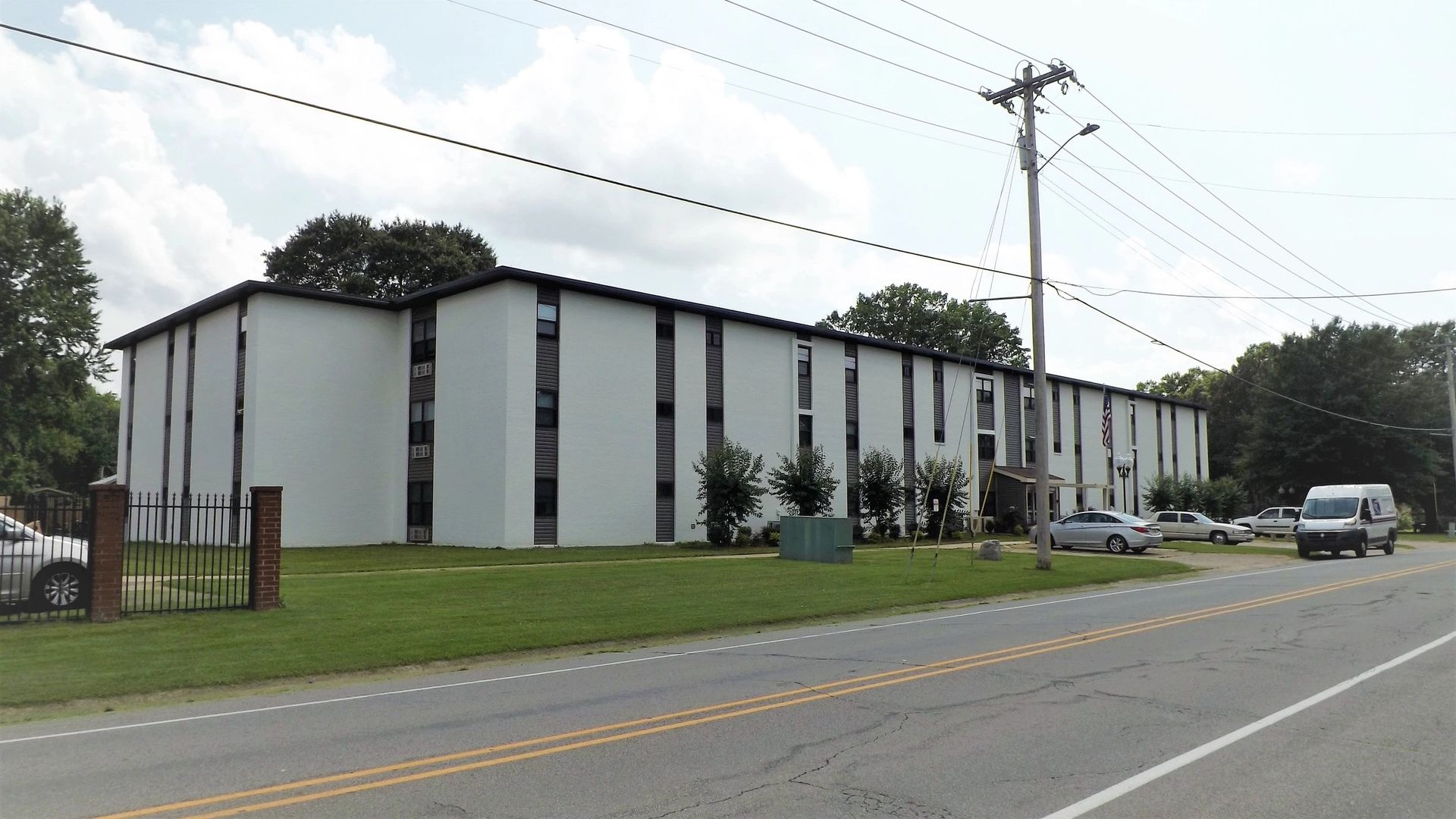
Oakwood Place
Located at 1701 Hairston Street in Conway, Arkansas, Oakwood Place Apartments is a three-story complex designed for independent living elderly and disabled individuals.
Oakwood Place Apartments consist of 62 efficiency and one-bedroom apartments.
Income Limits & Waiting List Information
Income Limits
Income limits vary per number of individuals in the household.
| 1 Person | $46,500 |
|---|---|
| 2 People | $53,150 |
| 3 People | $59,800 |
| 4 People | $66,400 |
| 5 People | $71,750 |
| 6 People | $77,050 |
| 7 People | $82,350 |
| 8 People | $87,650 |
Waiting List Information
Anyone above the age of 18 is eligible to apply, excluding convicted sex offenders and individuals with methamphetamine-related criminal charges.
Full-time students with no children who are not disabled or veterans cannot apply.
There are no restrictions based on sex, familial status, religion, gender identity, or sexual orientation.
There is a preference for homeless individuals, including:
- Individuals whose primary nighttime residence is a public or private place not designed for typical housing, such as cars, parks, bus or train stations, and camping grounds.
- Individuals residing in a supervised publicly or privately operated shelter designed to provide temporary living arrangements.
- Individuals who are at immediate risk of losing their housing arrangements or who have received a 14-day notice to vacate their current residence.
Annual Reexamination and Choice of Rent
At initial occupancy and at annual reexaminations, HUD requires Public Housing Agencies (PHAs) to offer families the choice of paying income-based rent or a flat rent.
Income-Based Rent
Income-based rent is the higher of 30% of adjusted income or 10% of gross income.
Flat Rent
Flat rent is generally based on 80% of the fair market rents for the PHA's jurisdiction, as determined by HUD.
In either case, the amount must be at least the minimum rent established by the PHA, which may be up to $50.
Public Housing Flat Rents
Review the previous flat rent, 2026 Fair Market Rent (FMR), and updated flat rent by unit size.
| Unit Size | Previous Flat Rent | 2026 FMR | Updated Flat Rent |
|---|---|---|---|
| Efficiency | $451 | $984 | $787 |
| 1 Bedroom | $503 | $989 | $791 |
| 2 Bedrooms | $582 | $1,147 | $917 |
| 3 Bedrooms | $826 | $1,540 | $1,232 |
| 4 Bedrooms | $978 | $1,822 | $1,457 |
Understanding Your Rent Options
The PHA must provide sufficient information about rent options for families to make an informed choice.
Such written information must include at least:
- The PHA's policies on switching type of rent in circumstances of financial hardship.
- The dollar amounts of tenant rent for the family under each option.
Housing Choice Voucher Program
The Housing Choice Voucher program currently administers traditional vouchers, Mainstream vouchers, VASH vouchers, and EHV vouchers. CHA also manages an additional 50+ people with vouchers transferred to Faulkner County.
HCV Staff
Contact the appropriate staff member for assistance with vouchers, case management, portability, or inspections.
HUD-VASH
The HUD-Veterans Affairs Supportive Housing (HUD-VASH) program combines Housing Choice Voucher (HCV) rental assistance for homeless Veterans with case management and clinical services provided by the U.S. Department of Veterans Affairs (VA). VA provides these services for participating Veterans at VA medical centers (VAMCs) and community-based outreach clinics.
Income Limits & Payment Standards
Review current household income limits and payment standards for the Housing Choice Voucher Program.
Household Income Limits
| Household Size | Income Limit |
|---|---|
| 1 Person | $32,800 |
| 2 People | $37,500 |
| 3 People | $42,200 |
| 4 People | $46,850 |
| 5 People | $50,600 |
| 6 People | $54,350 |
| 7 People | $58,100 |
| 8 People | $61,850 |
Payment Standards
Moving With Your Voucher
Learn what to expect when transferring your voucher into or out of Faulkner County.
Porting In is the term used for when a current voucher holder from another housing authority decides they wish to move to Faulkner County.
CHA is currently billing, meaning each month CHA will send the housing authority you are moving from a bill for the amount of rent we pay.
Your housing authority must accept this condition before we can move forward in the porting process.
It is never advised to look for a place to live in Faulkner County without first getting the guarantee from both housing authorities that your rental assistance will transfer.
Porting Out is the term used for when a current voucher holder from Conway Housing Authority decides they wish to move out of Faulkner County to a different jurisdiction.
The best way to initiate this process is to call (501) 327-0156 ext. 104 or ext. 102 to set up an appointment to discuss how your rental assistance can be transferred.
The porting process should be initiated at least three months prior to your yearly recertification, as you are not allowed to break your yearly lease.
Please do not begin searching for a new place before you have confirmation from both housing authorities that your rental assistance will transfer.
Resident Opportunity and Self-Sufficiency (ROSS)
The Resident Opportunity and Self-Sufficiency (ROSS) Program connects you with resources and supportive services that can help you reach your personal goals and strengthen your independence.
ROSS is for everyone and designed to meet you where you are. Whether your goal is finding a job, continuing your education, improving your finances, accessing health and wellness resources, or remaining safely and independently in your home, the ROSS Program can help connect you with the right resources and support.
Support Based on Your Goals
Depending on your needs and goals, ROSS may connect you with the following services and resources.
Employment & Job Training
Job search assistance, career development, job readiness training, resume assistance, interview preparation, and connections to resources to overcome barriers to employment.
Seniors & Residents with Disabilities
Connections to in-home supportive services that promote independence, improve quality of life, and help residents remain safely in their homes and communities.
Family Support
Childcare resources, family services, transportation assistance, and other community engagement programs.
Education & Training
Adult education, GED programs, vocational training, college, and other educational opportunities.
Financial Stability
Financial education, budgeting resources, benefits information, and connections to programs that can help strengthen household finances.
Health & Wellness
Talk With the ROSS Coordinator
Trinity Leonard
(501) 327-0156 ext. 111
tleonard@conwayha.org
Resident Service Center
425 S Davis Street
TBRA Program
The Tenant-Based Rental Assistance (TBRA) program, administered in Arkansas by the Arkansas Development Finance Authority (ADFA) under the HOME Investment Partnerships Program (HOME), provides direct rental assistance to eligible low-income households to help them afford safe, decent, and sanitary housing in the private rental market.
The TBRA Waiting List is Currently Closed.
CHA is not currently accepting new applications for the TBRA program.
Alisha Bates
Special Programs Case Manager
Assistance That Moves With the Household
TBRA provides flexible rental assistance designed to support household choice, mobility, and long-term housing stability.
Household-Based
TBRA supports individual households rather than tying assistance to a specific property.
Portable Assistance
Assistance follows the tenant, allowing families to move to different rental units without losing their subsidy.
Housing Stability
The program promotes housing mobility, neighborhood choice, and long-term stability.
What TBRA Can Cover
TBRA may help eligible households with rental costs and certain expenses associated with securing housing.
Monthly Rental Payments
Assistance with monthly rental payments to help make housing affordable.
Security & Utility Deposits
Assistance with security deposits and utility deposits for households in transition.
Jobs Plus Program
Jobs Plus is a place-based program that promotes economic self-reliance for public housing residents through employment services, financial incentives, and community support.
Three Core Components
All three parts work together to create the Jobs Plus model.
Employment-Related Services
Grantees offer employment-related services to residents with a range of employment needs. Services are intended to reduce barriers to employment.
Financial / Rent Incentive
Residents enrolled in the Jobs Plus Rent Incentive will be granted a 100 percent earned-income disregard that remains in place for up to 48 months, or until the grant ends, whichever occurs sooner.
Community Support for Work
Jobs Plus services and the financial incentive are promoted to targeted residents throughout the community. The goal is to saturate communities with work-related messages and create a culture of work.
Eligible Residents
The target population for Jobs Plus is public housing residents who are considered workforce adults.
This generally includes residents ages 18 through 64 who are mentally and physically able to become employed.
Who is eligible?
Any public housing resident of the target public housing project is eligible for Jobs Plus.
Who is a participant?
A public housing resident of the target public housing project who has completed an assessment for the program.
Although the program focuses on workforce adults ages 18 to 64, adults over age 64 must be permitted to benefit from employment services and enroll in the Jobs Plus Rent Incentive.